I Built an App to Stop Impulse Spending. Then I Used It. I have paid off debt.
Why I Built “Should I Buy This?”
It was a cold January evening in 2026. I had planned on buying a few things from Amazon, but the winter storm had other plans. While browsing Amazon, I suddenly decided to do my spending math. Sitting alone in my apartment, I decided to look up my purchase history for the month, writing down every amount I had spent.
The total came to $735.30, and the month was not even over yet. That may not be much for some people, but for me, that was a red flag. In addition, the items I had purchased did not feel valuable. I was shocked. I even double-checked my calculations with ChatGPT to make sure the math was correct.
In that moment, I realized that I was nothing but a consumer. That had become my identity. I honestly did not want to calculate the previous months. It would have been too much of a guilt trip.
Meanwhile, I had debt that I was slowly paying off, but the progress had been slow. I instantly understood that impulse buying was the reason why. So I began wondering how to resolve this.
Deep down, I knew a budgeting app was not the solution for me. I had tried them before, and my brain simply does not work that way.
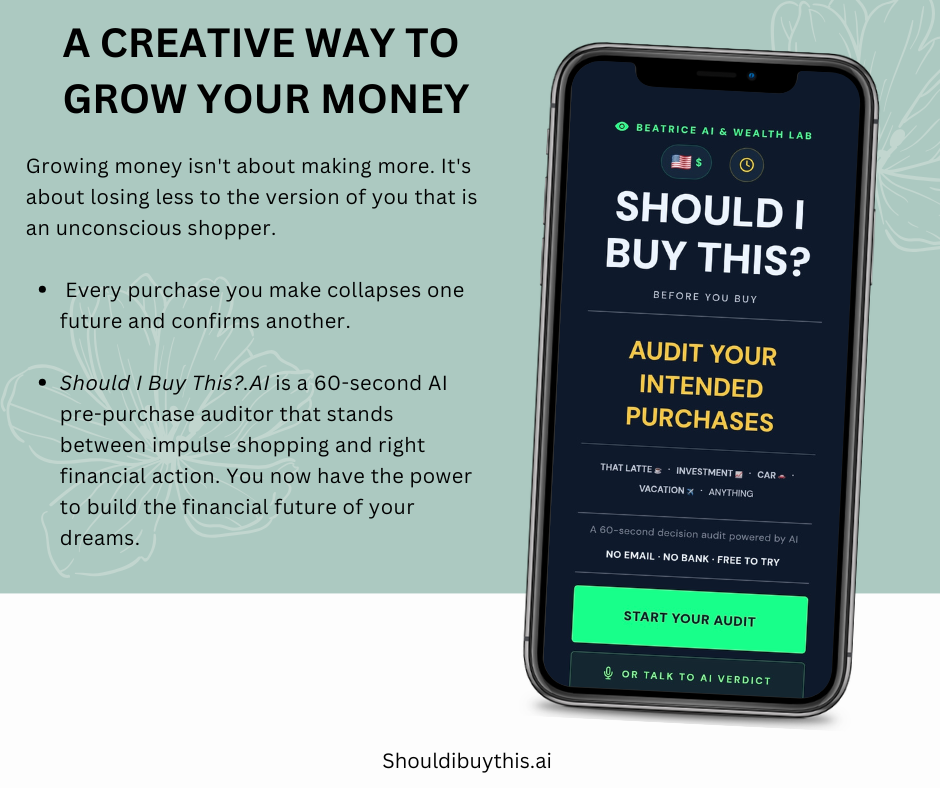
So I got creative. I decided to vibe code my way into financial awareness. Using Replit, I spent two months building my app. My brain needed a new pattern, and that pattern began with a question. So I named the app “Should I Buy This?”
I became so engaged in building the app that spending money started to feel like a burden. Usually after work and after my master’s studies, I would spend about six hours a week working with the AI agent, improving the app and shaping it into something meaningful.
What I did not realize at the time was that the act of building the app was already putting money back into my pocket because my time was invested in creating.
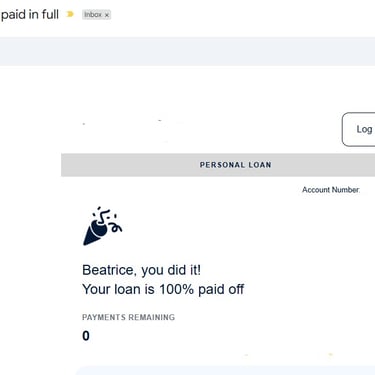
The testing and iteration process also involved using the app for my own purchases. Before buying anything, I would ask the app whether the purchase aligned with my financial position, and I followed the AI’s advice closely. And then, I had saved enough money to pay off my loan. See proof of payoff below.
The app has not just helped me spend less. It has helped me become more conscious of my financial behavior.
Many people do not lack wealth due to low earning. It is because money keeps flowing through them without ever crystallizing into wealth. Money spent without intention disappears. Money converted into wealth creates stability.
I also realized that creative processes can help wealth become a reality for many people.
That realization inspired me to submit the app to market as an offering to others who may need help dealing with impulse spending or active wealth creation.
I refined the app, prepared it for launch, and submitted it to the Apple App Store. That process became another journey in itself. I learned how the process of app development and deployment worked. The app was in good shape, and the few improvement rejections I received actually helped me understand the process much better.
This journey has been an incredible learning experience. I have developed new skills, learned to manage my finances through creativity with AI, and discovered that creation itself is a pathway to financial transformation.
I look forward to exploring even more possibilities as I continue growing with “Should I Buy This?” and with other future projects. To everyone called to receive this app, I celebrate you and congratulate you on your new wealth-building habits.
The app is available for download at shouldibuythis.ai. The Android version is currently being reworked and is expected to launch in June.
Thank you for reading